Wondering what defines a Sacramento Riverfront home at first glance? It is not just the roofline, brick, or siding. Along the Sacramento River, architecture is shaped by flood rules, levee conditions, subdivision design, and the era when a neighborhood was built. If you are exploring riverfront homes, lots, or future build opportunities, understanding those layers can help you read a property more clearly. Let’s dive in.
Why Riverfront Architecture Looks Different
Along the Sacramento River, design is closely tied to land planning. In Pocket/Greenhaven, the City of Sacramento describes the area as a suburban riverfront community, with the Pocket annexed in 1959 and Greenhaven 1 beginning in 1961. That first phase consisted primarily of ranch-style single-family residences, which still shapes the area’s overall look today.
The city also identifies Greenhaven as Sacramento’s first example of cluster planning. In practical terms, that means architecture here is often experienced as part of a larger neighborhood pattern, not just as one standalone house. Street layout, lot placement, and access to parks and the river all influence how homes sit and feel.
City transportation planning adds more context. Pocket/Greenhaven was built with a hierarchy of streets, cul-de-sacs, low-traffic residential frontages, and shared-use paths that connect to the river and parks. That suburban framework helps explain why many homes feel more open, set back, and neighborhood-oriented than what you might expect in a tighter urban river district.
Common Styles Along the Sacramento Riverfront
Ranch Homes in Pocket/Greenhaven
If you are shopping the Sacramento Riverfront, ranch is the most reliable starting point for older residential areas, especially in Pocket/Greenhaven. The city’s mid-century context statement places Greenhaven 1 squarely in the ranch era, and that postwar development wave left a lasting mark on Sacramento housing.
These homes often reflect the practical, low-slung style many buyers associate with mid-century suburban living. Even when a house has been updated over time, the original structure may still trace back to that ranch-era layout and footprint. For buyers, that matters because the style is often connected to lot shape, garage placement, and single-story living.
Mid-Century Modern Influence
Not every riverfront home will be labeled mid-century modern, but many river-adjacent properties come from the same broad postwar design period. Sacramento’s preservation work documented about 1,800 modernist properties citywide, which shows how strong that era was in local development.
On the riverfront, this influence may show up in cleaner lines, larger windows, or more custom-feeling design details. In listing language, some of these homes may be described as modern, custom, or updated mid-century rather than by a strict preservation label. That is one reason it helps to look beyond the marketing description and understand the home’s original design era.
Contemporary and Attached Housing
As you move toward more urban parts of the riverfront, the housing mix changes. The City of Sacramento describes the River District as a 1,050-acre area at the confluence of the Sacramento and American Rivers that is evolving from industrial land into an eclectic mixed-use community with housing options.
In these settings, buyers are more likely to encounter condos, loft-style residences, and other attached housing types rather than a classic detached ranch home. The architecture can feel newer or more contemporary because the land use pattern is different. Here, the riverfront experience is tied as much to mixed-use planning as to traditional single-family neighborhood design.
Elevated and Flood-Adapted Homes
Some Sacramento River properties are defined less by style and more by elevation. Sacramento County planning rules for Garden Highway note that the land between Garden Highway and the river is subject to flooding, includes many small lots, and contains numerous single-family detached dwellings.
In certain cases, city and county floodplain rules allow elevated foundations with parking or storage below, subject to approvals and deed restrictions. That means you may see a home whose most important architectural feature is not its façade, but how it has been adapted to floodplain conditions. For buyers considering renovation or rebuild potential, this distinction is especially important.
How Lot Type Shapes the Home
Cul-de-Sac and Interior Lots
In Pocket/Greenhaven, the lot pattern is generally suburban rather than urban-grid. Because homes often face low-traffic streets and connect to shared-use paths leading toward the river and parks, buyers commonly see interior lots, corner lots, and cul-de-sac settings.
That affects both curb appeal and day-to-day living. A home may feel connected to the river lifestyle without sitting directly on the water. For many buyers, that balance offers neighborhood comfort with easier access to recreation.
Riverfront and Levee-Adjacent Lots
The Sacramento River Parkway plan notes that the Pocket area includes about 8.5 miles of riverfront and is almost entirely single-family residential, with apartments and condos in a few places. It also states that many private owners have built fences, gates, landscaping, and some private docks on or near the levee.
This is a key detail for buyers. A riverfront lot does not always mean the same thing as public access, open views, or a dock-ready parcel. Two homes on the river can offer very different experiences depending on levee conditions, privacy features, and permitted improvements.
Garden Highway Parcels
Garden Highway has its own planning character. Sacramento County code describes it as a special area with unique environmental amenities, many small existing lots, and location within the 100-year floodplain.
The same code says new parcels must meet large lot standards, including a one-acre net minimum and 200-foot lot depth measured from the road centerline to the riverbank. That makes Garden Highway one of the clearest examples of riverfront lots being shaped by flood control and river geometry before style even enters the conversation.
Mixed-Use Riverfront Parcels
Not every Sacramento Riverfront property fits the detached-home model. In the River District and South Natomas Riverfront District, planning allows combinations of residential and commercial uses.
For buyers, that means the riverfront can include attached homes, condos, apartments, and mixed-use housing settings. If your goal is a walkable urban feel rather than a traditional suburban riverfront home, this part of the market may look very different from Pocket or Garden Highway.
What Buyers Should Notice Beyond Style
Views Versus Access
A river view and river access are not the same thing. The city’s current Sacramento River Parkway project says the levee top through the Pocket includes both public and private ownership, and private segments typically do not include public-access easements.
That distinction matters in everyday life. Two homes may have similar views, but one may sit near planned trail access while another may feel much more private and separated from public use. If you are comparing riverfront properties, this is one of the most important questions to ask.
Floodplain Rules and Renovation Plans
If you are thinking about remodeling, adding on, or building new, local flood rules should be part of your planning from the start. The City of Sacramento says it adopted flood-zone construction rules, including 200-year floodplain requirements effective July 2016. The city also reminds owners not to dig, plant, or build at the base of a levee.
Sacramento County rules add another layer. New residential construction in levee-protected areas must place the lowest floor at or above the 200-year flood water surface elevation or use a levee that provides Urban Level of Flood Protection. In some floodway situations, elevated foundations with lower levels used for parking or storage may be allowed if the required restrictions and approvals are in place.
For buyers, this means the design conversation is often also a land-use and permitting conversation. A charming riverfront parcel may have great potential, but the path forward depends on the site’s regulatory framework as much as its visual appeal.
Docks and Waterfront Features
Some parcels support classic riverfront amenities such as private boat docks, fishing piers, swim floats, or slips. Sacramento County’s Garden Highway ordinance explicitly allows private boat docks and related water uses on qualifying parcels, and the Pocket plan notes that some private owners have installed docks with permission from the State Lands Commission.
Still, these features are not automatic. The presence of a river behind the home does not guarantee the right to add or keep every waterfront improvement. This is another reason property-specific review matters when you are evaluating a Sacramento Riverfront opportunity.
What This Means for Buyers and Sellers
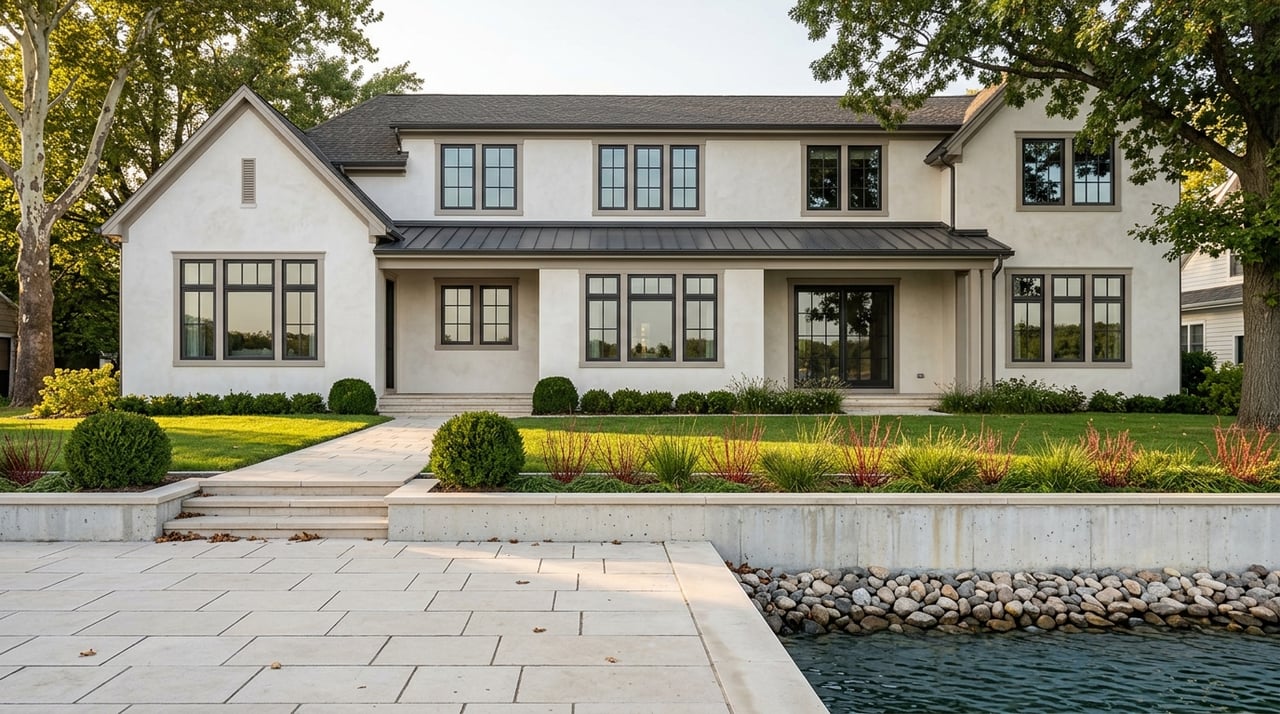
If you are buying along the Sacramento River, the façade tells only part of the story. The most common residential look remains ranch-era suburban housing in Pocket/Greenhaven, but the broader riverfront also includes elevated flood-adapted properties, Garden Highway parcels with unusual lot standards, and newer mixed-use housing in urban districts.
If you are selling, those differences matter just as much. A well-positioned riverfront property should be framed around its true strengths, whether that is architectural era, lot placement, privacy, access, build potential, or waterfront improvements. The right strategy starts with understanding what kind of riverfront asset you actually have.
For both buyers and sellers, Sacramento Riverfront architecture is really a story about design meeting geography. Once you understand the planning context, style becomes easier to read and the opportunities become easier to compare.
If you are exploring a riverfront home, land purchase, or build opportunity in Sacramento, working with someone who understands both neighborhood character and property complexity can make a real difference. Lisa Rayman can help you evaluate riverfront homes, lots, and development possibilities with local insight and practical guidance.
FAQs
What architectural style is most common along the Sacramento Riverfront?
- In residential riverfront areas like Pocket/Greenhaven, ranch-style homes from the postwar era are the most common pattern described in city planning and preservation materials.
What makes Sacramento Riverfront homes different from other Sacramento homes?
- Sacramento Riverfront homes are often shaped by flood control rules, levee conditions, subdivision planning, and lot geometry, not just by visual design or architectural ornament.
What types of riverfront lots are common in Sacramento?
- Buyers may encounter suburban cul-de-sac and interior lots in Pocket/Greenhaven, levee-adjacent riverfront parcels, Garden Highway lots shaped by special planning rules, and mixed-use urban parcels in districts like the River District.
What should Sacramento buyers know about river views and access?
- A river view does not always mean public access, direct water access, or a dockable lot, because levee ownership, easements, and permitted improvements can vary from parcel to parcel.
What should Sacramento buyers know about remodeling a riverfront home?
- Buyers should review local city and county floodplain requirements early, because elevation rules, levee restrictions, and construction standards can affect renovation, additions, and rebuild plans.
Are private docks allowed on Sacramento River properties?
- Some qualifying parcels may allow private docks and related water uses, including under Garden Highway rules, but eligibility depends on the specific property and required approvals.